Last Lecture Series: How to Win Without Crushing Your Soul
I spent 20 years thinking if I just achieved the next thing, I’d finally feel like I was enough. It didn’t work, and I’ll spare you the suspense—it won’t work for you, either. But there is a path forward. In my Last Lecture to the Stanford Graduate School of Business class of 2026, I shared what I’ve learned from my internal journey over the last 12 years. You can watch it here, or read a summary below.
A few months ago I was sitting on a plane, banging away on my laptop as the rest of the passengers boarded. I had a ramekin of nuts on my tray table, and suddenly a tiny hand reached up and grabbed them. As I looked up, a pigtailed little girl about five years old stuffed cashews into her mouth, then shoved a stuffed rabbit into my face. “This is Roger,” she said. “I think you need him.”
I could tell Roger was her lovey; all my kids had them. He was missing an ear and smelled like a combination of saliva and bleach. But he was surprisingly soft. I thought to myself, “She’s right. I do need Roger right now.”
The little girl’s mom, too exhausted to find the interaction amusing, ushered her along. Her younger brother was close behind—still a toddler, he was excitedly dragging his little roller bag down the aisle, banging into every seat as he went. Then came Dad, who was clearly far less amped for the flight and looked like he hadn’t slept in three years, probably because he hadn’t. He was wearing a backpack with one car seat, carrying another, and had a diaper bag slung around his head. We gave each other a nod as he headed to the rear of the plane.
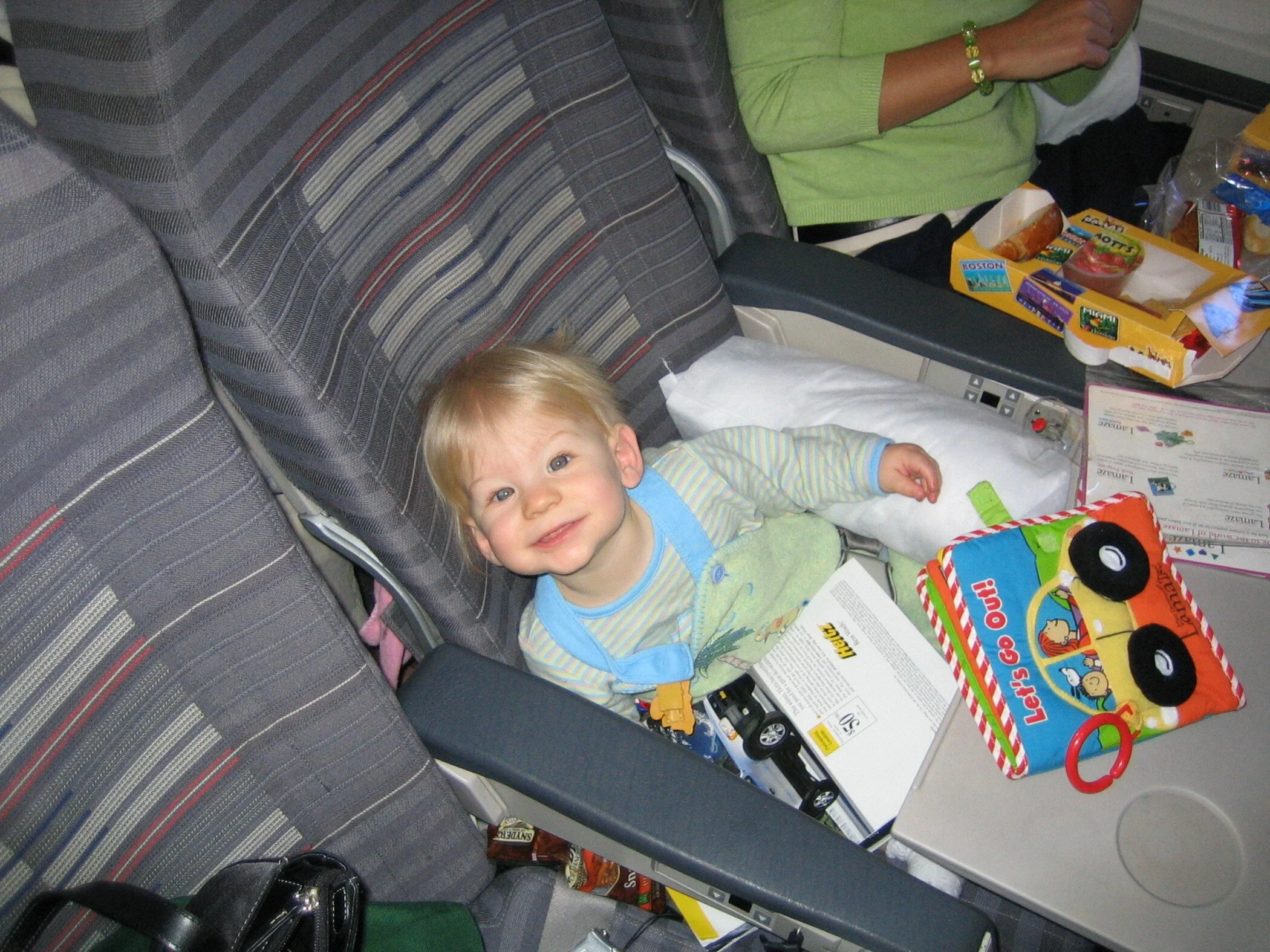
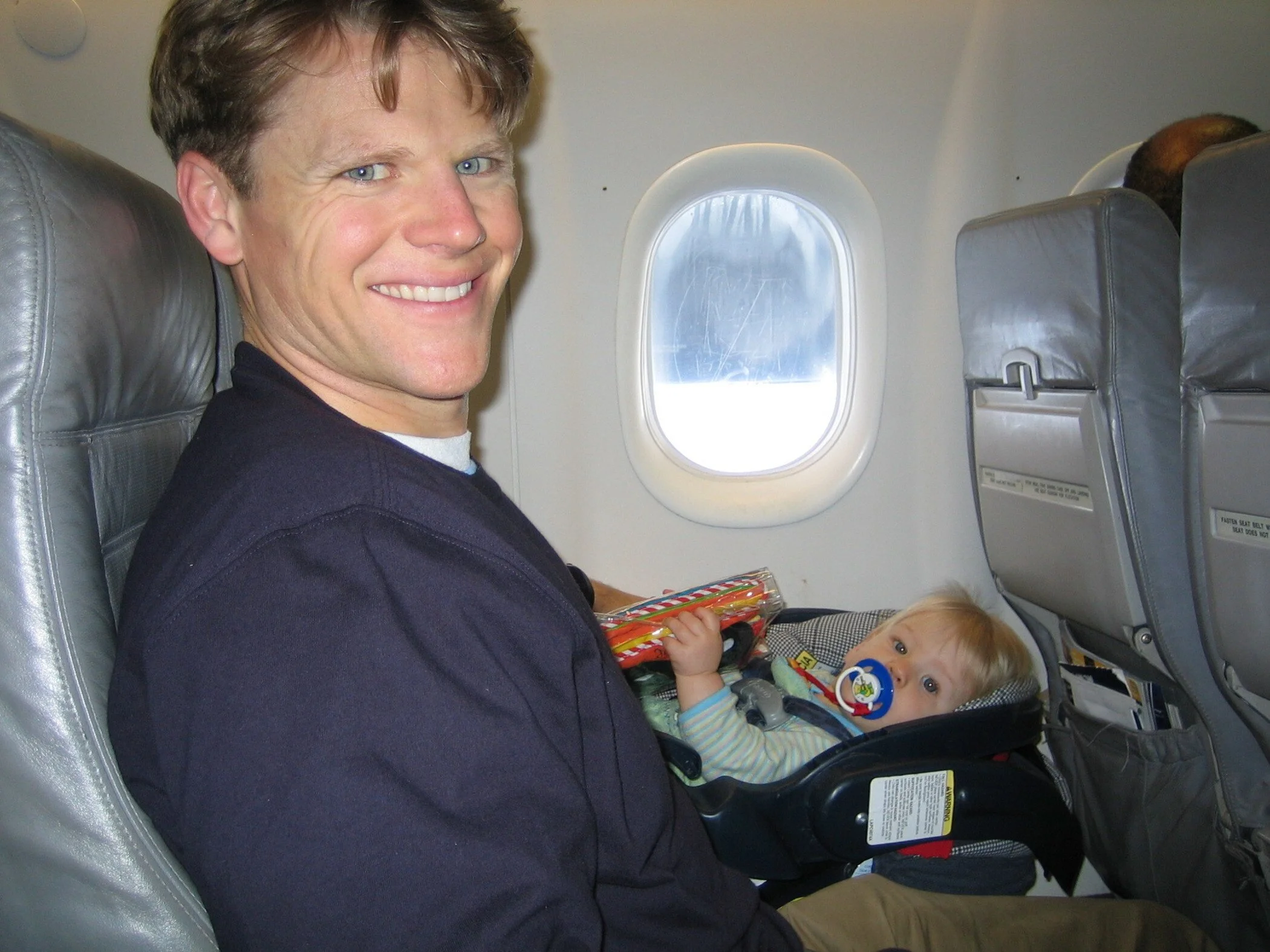
Not so long ago I was that dad. My wife and I had three kids under five, and we took them everywhere—most often from San Francisco to Detroit. It’s a four-and-a-half-hour flight on a good day, and even that is a long time to keep young kids occupied. We didn’t have iPads back then. We read books. We played games. We did magic tricks. (If you want to feel like a great magician, do tricks for toddlers. They fall for everything.) I remember boarding a flight and heading to my seat in row 32, passing a guy in first class with his Wall Street Journal and his glass of champagne, thinking, “Man, I’d love to trade places with him.” Now I was that guy in first class with a quiet flight in front of me—and I would have given anything to be back in row 32, desperately trying to keep Chase, Blake, and Lilly entertained.

The Mistake That Cost Me Decades
I rushed through a lot of my life. In high school, I cranked to get into college; I plowed through college on my way to Wall Street; I worked 100-hour weeks while trying to start a company.
The goals weren’t the problem. Neither was the hard work. The problem was I wasn’t comfortable in my own skin. And so I always wanted to be somewhere else. I thought someday I would “arrive” and everything would finally be okay.
Then one day I did arrive, or at least I thought I did. My firm, Alpine Investors, had our first big payday. It wasn’t life-changing, never-work-again money, but it was enough to put away for the kids’ college, and to feel, for the first time, like I could exhale. Consciously or unconsciously, I’d been waiting decades for that moment. Then the wire hit, and a funny thing happened: Nothing. My life didn’t change; my relationship with myself didn’t change. And within six months, I felt completely lost. I was exhausted constantly. Sometimes I’d close the door to my office and cry for seemingly no reason. All those years, I hadn’t been running toward something after all. I’d been running away from the voice in my head telling me I wasn’t enough.
I didn’t want more accomplishment. I just wanted to like myself. And trying to find internal validation through external achievement is like drinking salt water to quench your thirst—it only makes you thirstier.
“Trying to find internal validation through external achievement is like drinking salt water to quench your thirst.”
Metacognition: The Internal Game
What I know now is that we are always playing two games, an external game and an internal game. The external game is about where you work, the money you make, the trips you take. I’m not trying to talk you out of materialism, but the internal game, your relationship with yourself, is where everything you create actually starts. It’s where joy comes from. Life is an internal game played in an external arena.
“Life is an internal game played in an external arena.”
The technical term for this internal work is metacognition, which sounds complex but really just means thinking about your own thinking. It’s a muscle you build with meditation, coaching, journaling, therapy, or just being alone with your thoughts. Over the past 12 years of building this muscle, I’ve learned you can be ambitious and still like yourself; you can make money and still find peace. It takes work. But you can win without crushing your soul.
“It takes work. But you can win without crushing your soul.”
There are three practices of metacognition I used to change my life, and I think they can change yours, too.
Practice 1: Fire the Coach
Imagine you’re at a kids’ baseball game, watching a coach talk to an eight-year-old who’s having a bad day. The coach says, “Look, kid, you’re not entitled to anything. You’ve got to earn it every day.” Okay so far. But then he says, “When you perform, you have value. When you don’t, you don’t. And right now, you don’t.” And imagine the little boy takes that in. He doesn’t argue, or cry. He just makes those words his operating system.
When I started paying more attention to the internal game, I realized I’d been having that conversation internally every day. I was the coach telling myself I had no value without performance, and I was the little boy internalizing that message.
At first, I thought what so many of us do: “Okay, sometimes I’m hard on myself. But that’s where my motivation comes from. It’s what keeps me going.” Eventually, though, I had an experience that changed my relationship with my inner coach. Alpine had our biggest loss ever on a deal. It was brutal, and my coach just berated me. “You’re an idiot.” “How could you let this happen?” “You don’t know what you’re doing.” Finally, I noticed what I’d missed before: my coach never had ideas or advice or solutions, or really anything of value. And it was at this moment I realized my inner coach represented a single thing: fear. Fear that I wasn’t enough, fear I would fail, fear that I didn’t matter. The inner voice I’d been listening to for decades was just my own fear, incarnated.
“The inner voice I’d been listening to for decades was just my own fear, incarnated.”
And here’s the other problem with the coach: Their voice doesn’t stay in your head. When I berated myself, it affected how I showed up for my family. I brought negativity to my team at work, and they started second-guessing themselves, too. You can’t have a relationship with someone else that’s better than the one you have with yourself. So what’s the most loving thing you can do, for you and for them? Fire the coach.
If you want to win without crushing your soul, fire the coach.
Practice 2: Pull Out Your Nails
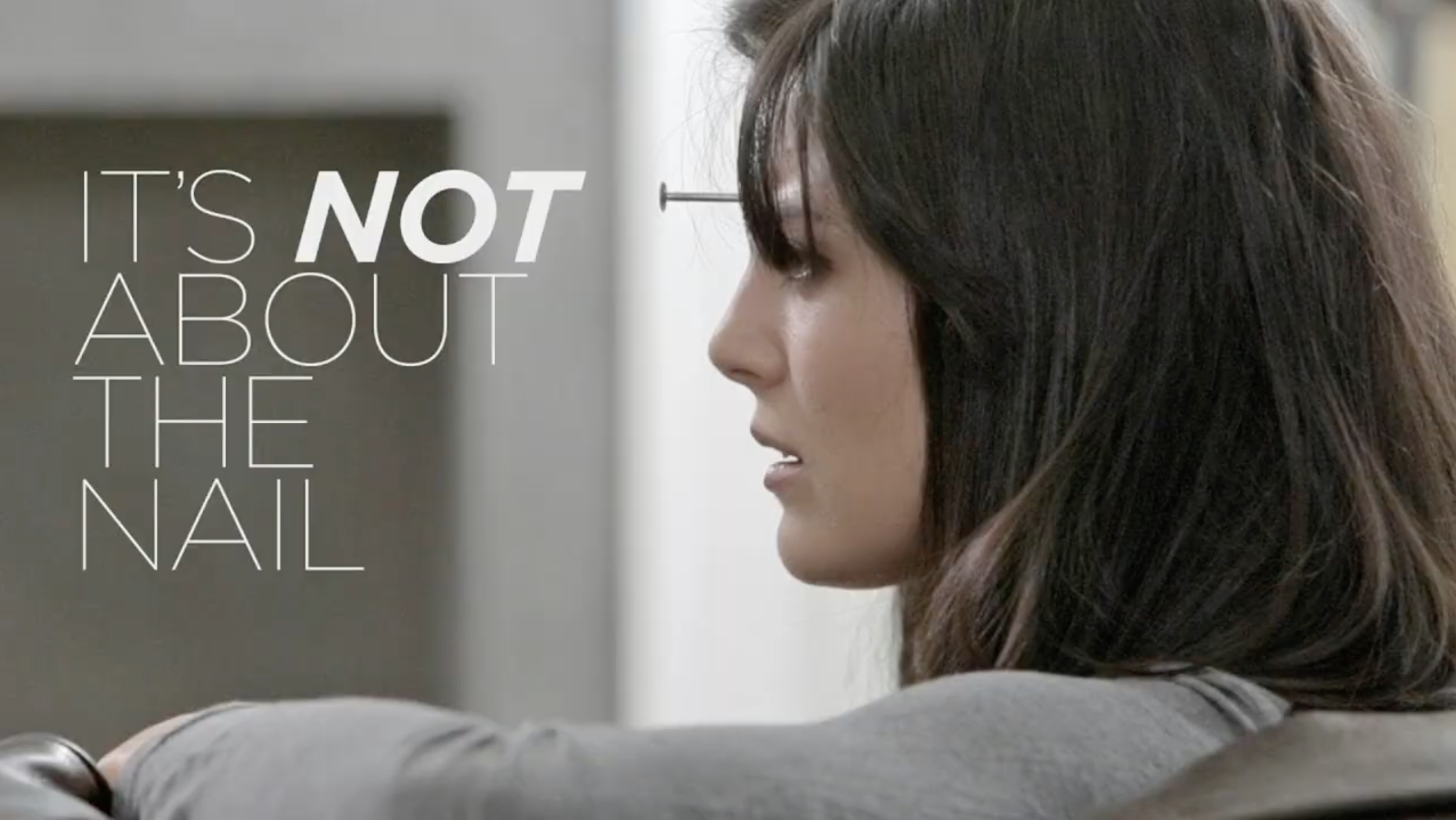
There’s a funny viral video that starts with a woman talking about feeling relentless pressure. She’s having headaches; you can tell she’s suffering. Then the camera turns to reveal a physical nail in her forehead. The man she’s talking to, her partner, finally says, “Well … You do have a nail in your head.” And the woman says, “It’s not about the nail!”
She keeps talking, going on about everything except the thing causing her pain. When I first saw it, I thought, “I can relate.” The metaphorical nails in my head were painful and obvious, as well. And I also wanted to avoid talking about or even thinking about the actual thing that was causing me pain—the nail.
We all accumulate nails in life. Some we create ourselves; some we don’t. Yours might be the job that’s draining your energy, the bad habit that’s taking a toll on your life, or the relationship that’s run its course. It’s the thing you ruminate on at 2 a.m. The reason we don’t pull these nails out is always the same: It hurts! As the psychiatrist Carl Jung once wrote, “Where the fear is, there is your task.”
I know a woman I’ll call Olivia, who shortly after college graduation got engaged to a guy I’ll call Jim. They moved in together, which made it harder for Jim to hide his drinking. He’d get angry and yell at Olivia, then apologize the next day. But days later, it would happen again. As the wedding date approached, Olivia started having second thoughts—her gut told her this relationship wasn’t right. But the invitations were out; the deposits were paid. Olivia ignored the pit in her stomach and her inner voice warning her to leave the relationship. She got married.
Jim’s drinking only got worse, and shortly after the wedding, Olivia knew she’d made a mistake. But then she got pregnant. Then another kid came, and another. I have talked to Olivia nearly every year since her wedding, and every time she tells me she’s going to make a change.
That 25-year-old girl who nearly called off her wedding is 62 now. That marriage—Olivia’s nail—has cost her 37 years of her life.
Pulling out your nails may hurt, but leaving them in can be even more devastating.
So how do you pull out a nail? It’s a multi-step process:
Bring your nail out of the shameful shadows. Admit you have a nail. Start talking about it.
Assemble a team. Don’t face your nail alone. Whether it’s friends or a therapist, find someone who can help.
Resolve to pull it out. Commit, even though your life will get worse before it gets better.

The chart above is what life looks like over a long period of time—I wish it were linear, but it’s not. The peaks are where we often get stuck, because the path to each one—to growth—traverses first through a valley. To leave the bad relationship, you have to have hard conversations and you might be alone for a while. If you quit your job, money might be tight for a while. Stop drinking and sobriety may feel dull and painful. But internalizing this graph can change your life, because it shows you a powerful truth: everything you want is on the other side of “worse first.” Facing your fears is a superpower. It is the path to growth, and the path of self-love.
“Everything you want is on the other side of worse first.”
If you want to win without crushing your soul, fire the coach and pull out your nails.
Practice 3: Trust Your Second Voice
Thankfully, the inner coach that represents your fears isn’t the only voice inside your head. The second one goes by many names: intuition, your higher self, God, the universe, source. Whatever you call it, it speaks not through fear, but through energy—energy is the language of your soul. This voice is your excitement. It can also be your dread, like the pit in Olivia’s stomach before her wedding.
In 24 years of teaching at Stanford, the problem students bring to me most is that they’re struggling to choose. Let’s say it’s a career dilemma: Option A is a job in their previous industry, with a clear path ahead. Option B is a job they’re scared of, or maybe just an idea they have. I ask a few questions: “What’s exciting to you about Option A? Option B?” “If you knew you wouldn’t fail, what would each of them look like?” Usually, it’s immediately obvious to both of us how the energy in the room changes as they talk about one option versus the other. Some part of them knew what they wanted before they even walked in the room.
If you’re facing a big decision and don’t know what to do, ask yourself: Are you actually unclear, or just afraid? My guess is it’s the latter. Your soul has already told you. Everything else is just negotiation with fear.
“Your soul has already told you. Everything else is just negotiation with fear.”
This is why you need to tune into your second voice. Run your life from your second voice, not from your fear. The wisdom of the second voice has been talked about for centuries. In Christianity, you pray and get a download from God; in Buddhism, you meditate and tap into source. Steve Jobs called it intuition: “Have the courage to follow your heart and intuition. They somehow know who you truly want to become.” My favorite version is from Rumi: “Your heart knows the answer. Run in that direction.”
But listening to your heart is one thing; running in the right direction is another. Like anyone else, I’ve spent years in the wrong relationship, in the job I knew wasn’t right, and with the pit in my stomach—and still didn’t act. The good news is, there’s a simple, practical way to overcome fear: Write it down. Fears are most dangerous when they’re lurking in your subconscious. That’s when they paralyze you. Put them on paper, and they transform into a problem to be solved. “I can’t do this because of my loans” becomes, “How do I reduce burn enough to start this and still cover my loans?”
Notice I said this was simple, not easy. I used to think that life was a complicated set of many difficult decisions. But over time, I’ve realized there is really only one decision: “Which voice will you listen to?”
If you want to win without crushing your soul, fire the coach, pull out your nails, and trust your second voice.
The Path to Loving Myself
At my lowest point 12 years ago, I tried many different things. For me, the first step on the path to these three practices was meditation. As I moved beyond 20-minute sessions to being more present all day, I started recognizing my inner coach for the fearmonger he was. I gave myself permission to stop beating myself up. To be clear, I still work on this today. But I’ve managed to shift from being my harshest critic to my own best friend. It’s made a huge difference in how I show up for my family, how I support my team, and most of all, how I accept myself.
As I sat quietly with my thoughts, I also realized I had nails everywhere. There were conversations I was avoiding, people I needed to remove from my life, habits—alcohol, caffeine, sleeping pills—draining my energy. There were things from my past that I’d buried. I didn’t remove these nails all at once, and I didn’t do it gracefully, nor quickly. I made all kinds of excuses to keep them in place. And when I finally pulled out the first nail, it was just as I’d feared: life did get worse at first. But the valley was 100 times harder in my mind than it was in reality, and the peak in reality was much higher. I felt like a beach ball that had been held under water; as I let go, I shot 30 feet into the air. I’ve felt the same way every time I’ve pulled out a nail since; over time, the fear has faded away.
But by far the biggest change from internal work was learning to trust my second voice. For example, it led me to realize I didn’t actually have energy for private equity! That’s the business I was in, so I fought that realization big time. I wanted a different answer. But eventually, it led me to recognize that in our best deals, we’d found high-attribute people, put them in roles running companies, and given them permission to follow their own second voices. These were not only our most fulfilling deals, but also our best-performing ones—because a high-attribute person doing what lights them up over a long period of time is the most powerful formula I’ve found. By trusting my second voice, I realized we weren’t in the private equity business in the first place. We were in the people business.
If you’re doing something you’re not excited about, you can fake it for a while. But you will never do extraordinary work, because extraordinary work requires every part of you, over a very long period of time. It requires trusting your second voice. Since that low point in 2014, Alpine’s assets increased more than 50x. And more important than business success is what changed internally. Firing my coach, removing my nails, and trusting my second voice wasn’t just the path to financial success, it was the path to what I’d been searching for my whole life: self love.
“Extraordinary work requires every part of you, over a very long period of time.”
The Good Old Days Are Now
In the finale of the hit sitcom The Office, Andy Bernard says, “I wish there was a way to know you’re in the good old days before you’ve actually left them.” That quote makes me think back to being that young father in row 32. I wish someone had told me I was in the good old days then so I wouldn’t have stepped over some of them. But the more I have thought about the quote, the more I’ve found a deeper meaning. The point of parenting isn’t getting your kids from first to second grade or even into college. And the point of that flight was never just to get from San Francisco to Detroit. The point of the flight was just the flight. The point of the flight was to build a race track out of goldfish crackers on the tray table with my boys and for my daughter to fall asleep in my arms as I read Goodnight Moon for the 137th time knowing there would be a day when she was too old to do so. The point of the flight is just the flight.
So, your path to the life you want traverses through internal work, including these three metacognition practices. Fire your coach. Give yourself permission to stop berating yourself and shift from being your harshest critic to your own best friend. Remove the nails from your head. Move toward the thing that you fear, and realize everything you want is on the other side of “worse first.” And most of all, trust your second voice. Pay attention to the things that gives you energy, and then give yourself the courage to go towards those things.
You can stop running, because you’ve already arrived.
You’re in the good days now.
You always have been.
You always will be.
So go live them.